
Thousands of agents have the same website
If your brokerage gave you a website, it probably opens the way Amanda Miller's does: a stock photo, a line that says "Let's find your dream home," and a search bar. Amanda is a Keller Williams agent in North Carolina. Her site isn't broken. It is the same page thousands of other agents have, with a different name in the corner.
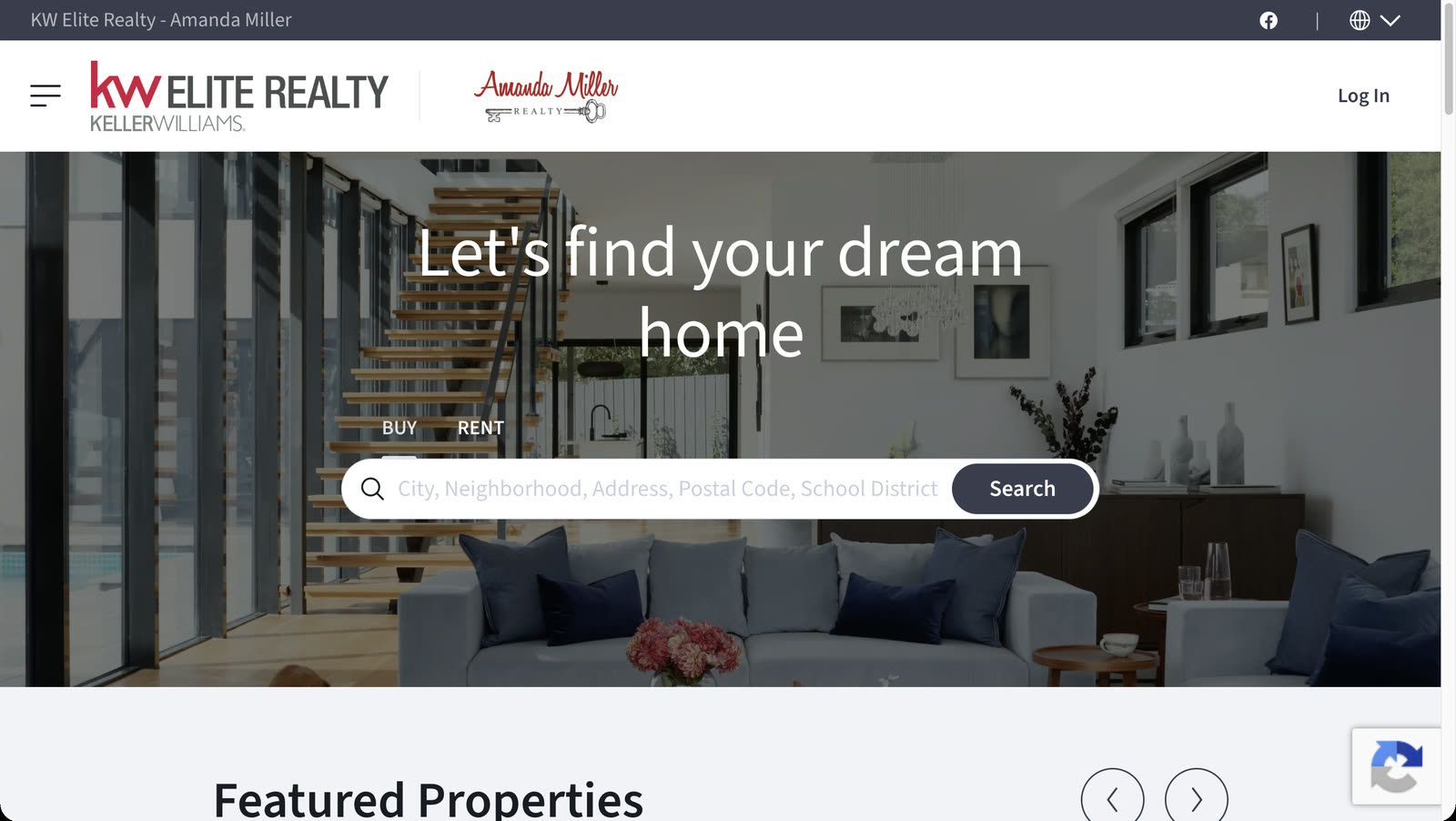
This is episode 1 of Website Glow-Up. Each episode takes one real agent's website, shows what we would build instead, and explains every decision so you can make the same ones on yours. Same agent, same brokerage, a site that feels like her.
Lead with the person, not the search box
A search box is the weakest way to open an agent's website. It tells a stranger where to go to look at houses. It says nothing about who you are, what makes you different, or why they should call you instead of opening Zillow.
So Amanda's first screen leads with her name, her area and one idea: there's no place like your place. The photo is one of her real listings, so the first home a visitor sees is one she is actually selling. That small choice tells a buyer this is a working agent, not a stock photo.
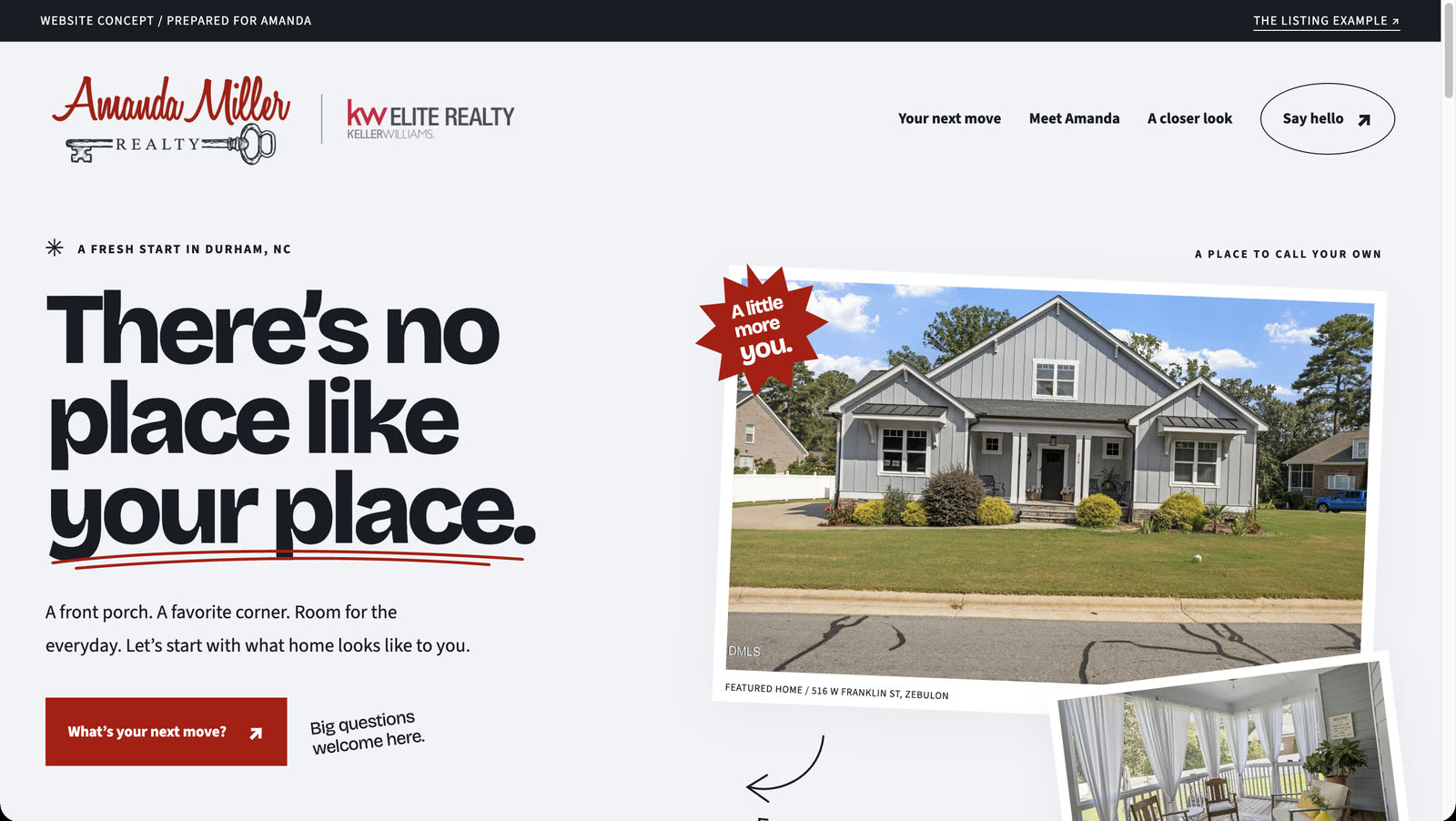
Two things did not change. Her logo stays, and the Keller Williams logo sits right beside it. Nothing is being taken away from the brokerage. And search is still one click away. It just isn't the first thing a stranger learns about her.
Build it from something true
The best design idea for an agent's website is often sitting on the About page, buried under a paragraph nobody reads. Amanda was a teacher before real estate, and she says one of her strengths is listening. That is a real difference between her and the agent down the street, so we built the whole site around it.
The new site says "Big questions welcome here" and "No perfect plan required." It invites the hard questions instead of hiding from them. Buying and selling each get three plain steps that explain how she works, not a pitch.
No one else in her market will have this website, because it is built from her story. People choose an agent they feel they already know. Your site is usually the first place they get to know you, so it should sound like you.
Give every page the same care
Most agents who put any work into a website stop at the homepage. The other pages, the About page, the listing pages and the neighborhood pages, stay exactly the way the template shipped them.
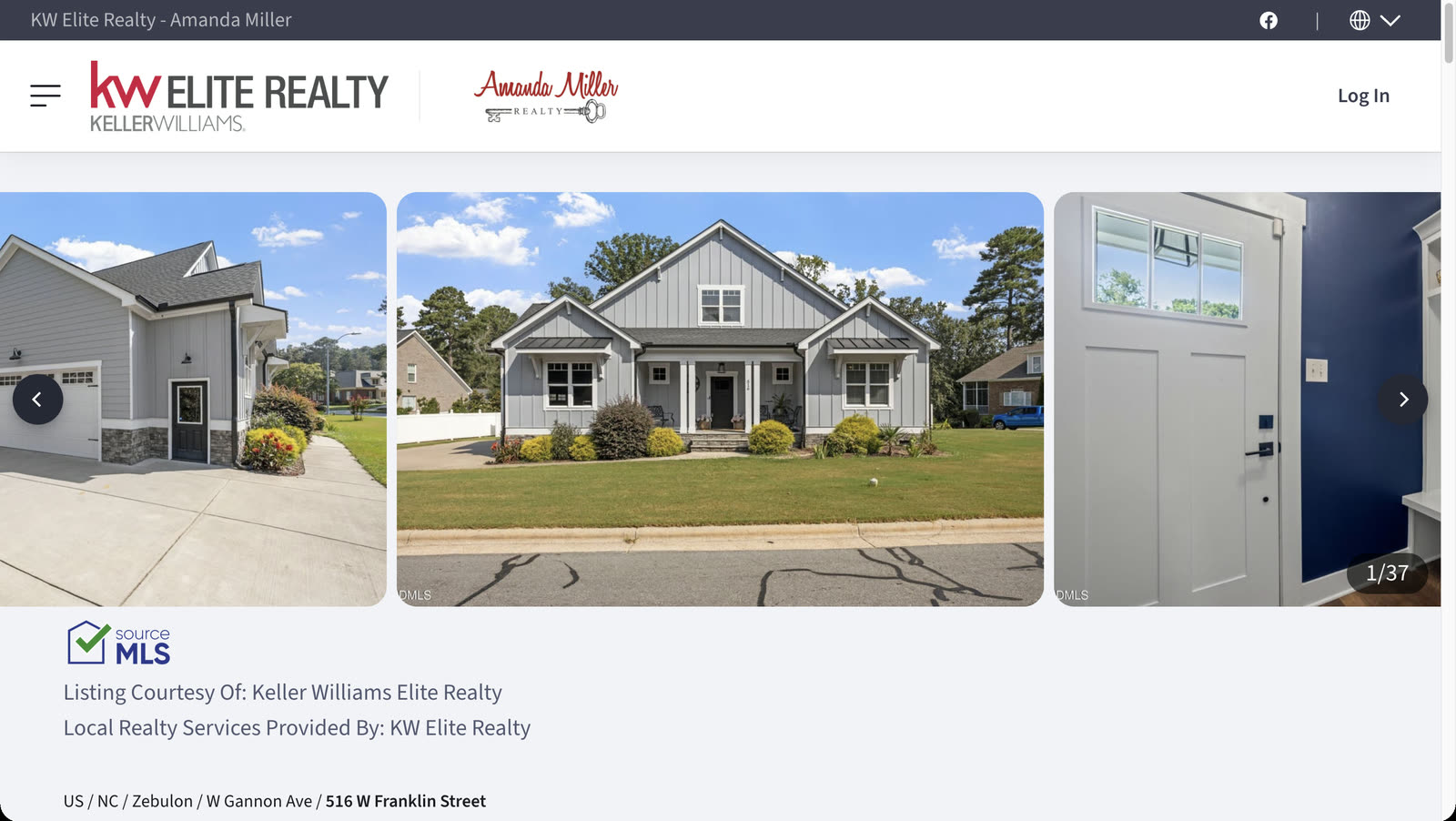
Here is Amanda's listing at 516 W Franklin Street on her current site: a photo carousel and a list of fields.
And here is the same home told as a story: the porch, the living room, the upstairs. The practical facts sit to the side in plain words, and the page ends on a real person: "Hello, I'm Amanda."
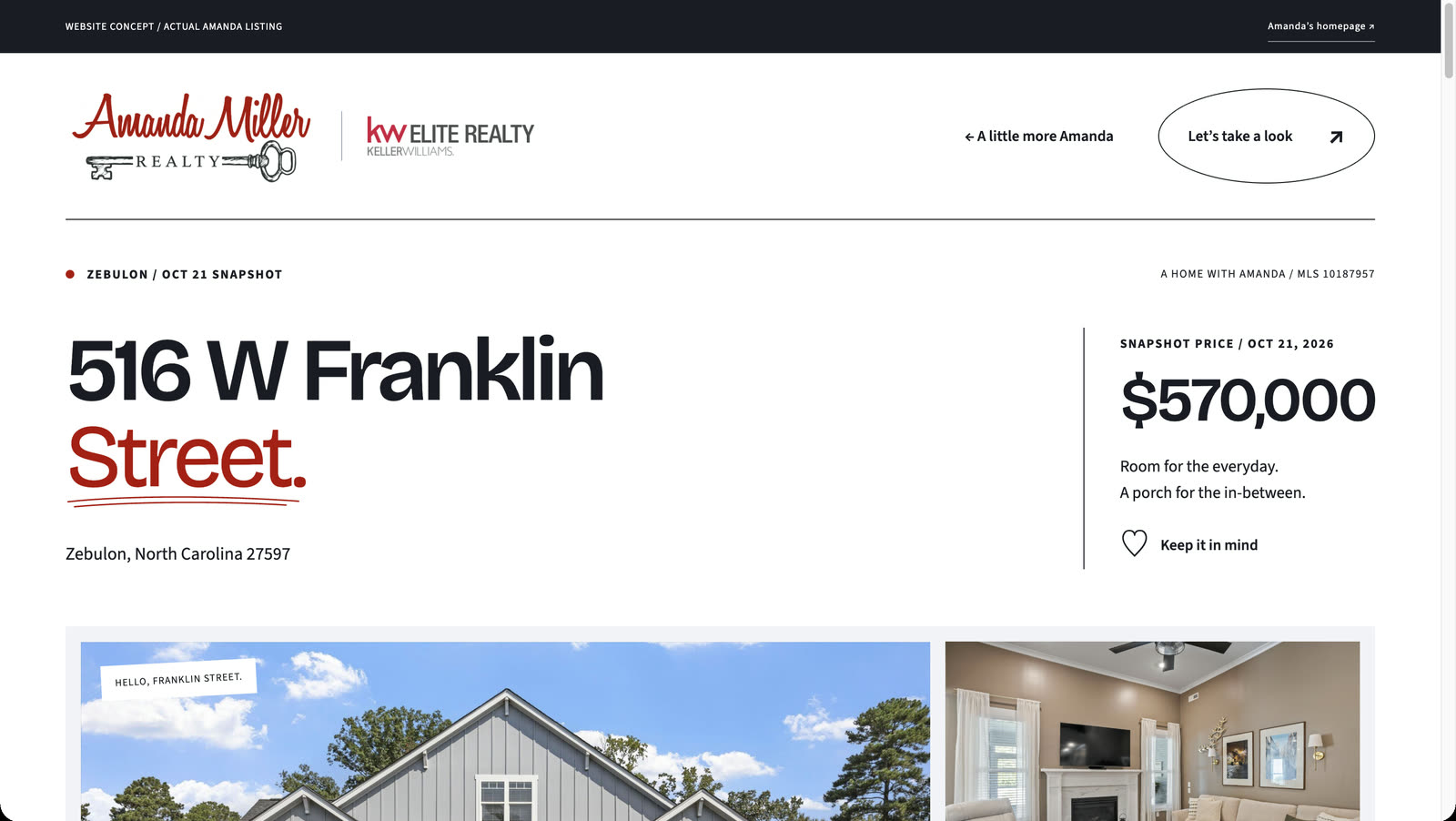
A listing page is often where a buyer decides whether to reach out. It deserves the same care as the homepage, and so does every other page a stranger can land on.
Why a template hurts you with buyers and with AI
To a buyer, a template looks like everyone else's. To an AI assistant like ChatGPT, it reads like everyone else's.
When someone asks an assistant for a good agent in their town, the assistant can only describe the agents it can read about. If every page on your site says what thousands of other agents' pages say, there is very little on it that is only yours.
Fixing that is not a trick. Write out what is true about you on every page: your name, your town, the homes you have sold, what your clients say, and how you work. That gives a buyer a reason to call and gives an assistant something specific to read. Nobody can promise an assistant will name you, but a site that says nothing specific gives it nothing to work with.
The cover-your-logo test
Here is a test you can run on your own website in a minute:
- Cover your logo and your name. Can you still tell the website is yours?
- Open three pages that aren't your homepage. Do they have the same care as the homepage, or do they read like the template they came with?
- Open one of your listings. Does it tell the story of the home, or just list the fields?
If the answer to any of these is no, the site is describing your brokerage, not you.
Own your website
One more question matters before you put work into a site: if you switched brokerages, would your website come with you?
If the brokerage owns it, your traffic history and the work you put into showing up in search and in AI answers stay behind. You start over from a clean slate. Your website should be yours, on a domain you control, so everything you build keeps working for you wherever you hang your license.
See it on your site
Send us your website and one live listing. We’ll rebuild your homepage and the listing page, show you the before-and-after, and tell you what else we’d change.
Amanda Miller hasn't hired us. This is an independent concept built from her public website. 516 W Franklin St is our October 21, 2026 listing snapshot. Listing photography via Doorify MLS.