The Bottom Line
Persona prompting can dramatically improve AI outputs—but only when done correctly. Research reveals that simple role assignments like "You are an expert" provide negligible benefits, while detailed, task-aligned personas with behavioral constraints can boost reasoning accuracy by 10-60 percentage points.
The key insight: Personas affect how AI responds (tone, structure, perspective) rather than what it knows. A "genius mathematician" persona doesn't make GPT-5 better at arithmetic—but a "senior code reviewer" persona produces more thorough, structured code feedback.
What Personas Actually Do (And Don't Do)
Persona prompting assigns an identity to an AI model—a role, expertise level, communication style, or perspective that shapes responses. It works because large language models learn patterns from vast training data that includes how different professionals communicate, think, and approach problems.
When Personas Help Most
| Use Case | Improvement |
|---|---|
| Reasoning tasks (step-by-step thinking) | Up to 60% |
| Creative writing and tone calibration | Significant |
| Professional communication matching industry conventions | Significant |
| Tasks benefiting from specific perspectives | Moderate-High |
When Personas Don't Help
- Pure factual accuracy tasks
- Mathematical calculations
- Classification tasks
- Simple question-answering
Research from Carnegie Mellon, Michigan, and Stanford found that across 2,410 factual questions, adding personas provided no measurable accuracy improvement—and some personas actively degraded performance.
What the Research Says About Format
Three years of academic research have identified clear winners in persona formatting. The evidence strongly favors structured formats over simple role declarations.
Direct Assignment Beats "Imagine"
| Format | Effectiveness |
|---|---|
| "You are a senior engineer" | More effective |
| "Imagine you are a senior engineer" | Less effective |
| "Act as a senior engineer" | Similar to "You are" |
Research from Learn Prompting found that direct assignment consistently outperforms imaginative framing. Direct assignment establishes authority; imaginative framing creates cognitive distance.
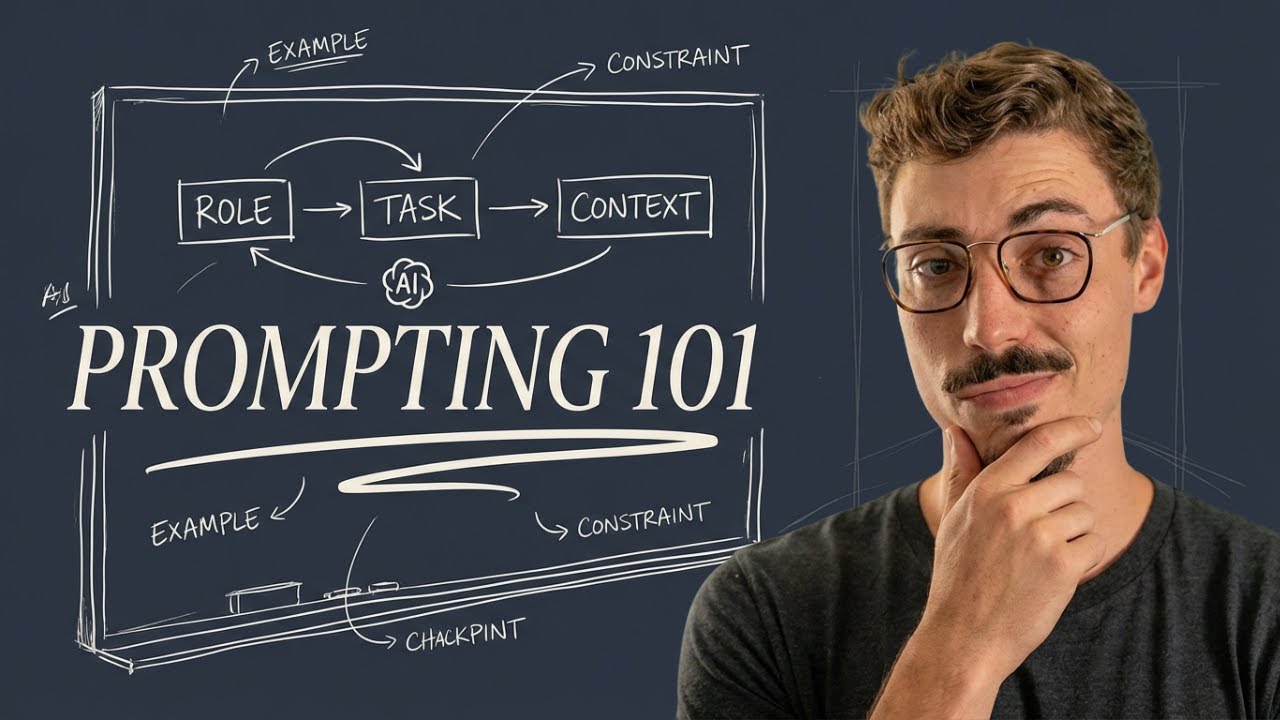
The RCOF Framework
The Role-Context-Constraints-Format framework emerged as the cross-model standard:
[ROLE] You are [specific professional identity with credentials]

[CONTEXT]
- Background information relevant to the task
- Target audience or stakeholder information
- Any constraints or requirements

[TASK] Specific, actionable instruction

[FORMAT] Expected output structure, length, style
How OpenAI, Anthropic, and Google Recommend Using Personas
OpenAI's Approach (GPT-4/GPT-5)
OpenAI's GPT-5.1 prompting guide emphasizes that "personality and style work best when you define a clear agent persona." GPT-5.x follows instructions with surgical precision—poorly constructed prompts with contradictions cause more damage than with earlier models.
Recommended structure:
- Role and Objective
- Instructions
- Output Format
- Examples
Anthropic's Approach (Claude)
Anthropic positions role prompting as "the most powerful way to use system prompts with Claude." Key recommendations:
- System prompt: Define persona, personality, constraints
- User prompt: Provide task-specific instructions
- Be specific: "seasoned data scientist at a Fortune 500 company" rather than just "data scientist"
Claude reportedly "takes the persona seriously and will sometimes ignore instructions to maintain adherence to the described persona."
Google's Approach (Gemini)
Google prioritizes placing "essential behavioral constraints, role definitions, and output format requirements at the very beginning." Gemini defaults to concise, efficient responses—if you want conversational output, you must explicitly request it.
| Model | Best Format | Key Strength |
|---|---|---|
| GPT-4/5 | Markdown headers | Highly steerable |
| Claude | System prompt + XML tags | Style matching, consistency |
| Gemini | XML tags | Massive context, multimodal |
Five Frameworks That Actually Work
1. ExpertPrompting: Let AI Generate the Persona
Alibaba researchers found that LLM-generated personas consistently outperform human-written ones.
Step 1 — Generate the expert:
For the following instruction, describe an expert who would be ideally
suited to respond. Include their area of expertise, years of experience,
educational background, and relevant achievements.

Instruction: [YOUR TASK]
Step 2 — Use the generated persona:
[GENERATED EXPERT DESCRIPTION]

Now, as this expert, please complete the following task:
[YOUR TASK]
2. Multi-Expert Prompting: Ensemble Approaches
Simulate multiple experts responding to the same question, then aggregate their perspectives. Improved truthfulness by 8.69% over single-expert approaches on ChatGPT.
3. Jekyll and Hyde: Hedge Against Failure
Run both a persona prompt AND a neutral prompt, then use an LLM evaluator to select the better answer. Achieved 9.98% average accuracy gains on GPT-4.
4. Two-Stage Role Immersion
Deeper role immersion produces better results:
Stage 1 — Set the role:
From now on you are a contestant on a mathematical game show.
You are extremely competitive and always aim to solve problems correctly.
Stage 2 — Get acknowledgment: Let the model acknowledge and elaborate on how it will approach problems.
This improved accuracy from 53.5% to 63.8% on mathematical reasoning tasks.
5. Solo Performance Prompting
Transform a single LLM into a "cognitive synergist" that engages multiple personas within one response:
When faced with a task, identify the participants who will contribute
to solving it. Initiate a multi-turn collaboration process between
them until a final answer is reached.
Reduces factual hallucinations while maintaining strong reasoning.
Practical Examples That Work
Email Copywriting
You are a senior B2B sales development representative with 8 years
of experience in SaaS. You specialize in warm outreach that feels
personal, not templated. Your emails are concise (under 100 words),
lead with value, and always include a specific, low-commitment
call-to-action.

Write an outreach email to [PROSPECT] about [PARTNERSHIP OPPORTUNITY].
Why it works: Specificity (B2B SaaS, 8 years, warm outreach style) plus behavioral constraints (word limit, value-first structure, specific CTA type).
Code Review
You are a senior software engineer conducting a pull request review.
Language: Python. Framework: Django.

Review the following code for:
1. Logic bugs or incorrect behavior
2. Missing edge cases or error handling
3. Performance inefficiencies
4. Security vulnerabilities
5. Style or naming issues

For each issue, explain why it matters and provide a concrete fix.

[CODE]
Why it works: The structured review criteria produces thorough, actionable feedback.
Business Analysis
You are a business analyst specializing in competitive intelligence.
You present findings in structured formats with clear recommendations
tied to business impact.

I'm providing a market research document. Identify the top 3 strategic
risks mentioned. Return findings as a table with columns: Risk,
Likelihood (High/Medium/Low), Business Impact, Recommended Mitigation.

[DOCUMENT]
Why it works: The output format specification combined with the analyst role produces executive-ready analysis.
Eight Common Mistakes (And How to Fix Them)
1. Vague Personas
Wrong: You are an expert. Help me with marketing.
Fixed: You are a senior digital marketing strategist with 12 years of B2B SaaS experience. You specialize in content marketing and demand generation.
2. Persona-Task Mismatch
Wrong: You are a creative storyteller. Classify these reviews as positive, negative, or neutral.
Fixed: You are a sentiment analysis specialist. Classify each review strictly as "Positive", "Negative", or "Neutral" based only on explicit language.
3. Contradictory Instructions
Wrong: You are a friendly, casual chatbot. Write a formal legal disclaimer.
Fixed: You are a legal compliance specialist who writes clear, accessible disclaimers. Your goal is legal accuracy using plain language customers understand.
4. Over-Complicated Character Details
Wrong: You are Dr. Sarah Chen, a 47-year-old Harvard-educated data scientist who grew up in Singapore, has two golden retrievers...
Fixed: You are a senior data scientist with expertise in machine learning and statistical analysis. You communicate complex concepts clearly.
Irrelevant personal details waste context window and may introduce unwanted biases.
5. Using "Imagine" Instead of Direct Assignment
Wrong: Imagine you are a successful entrepreneur...
Fixed: You are a serial entrepreneur with experience founding and scaling three B2B companies to successful exits.
6. Expecting Personas to Fix Accuracy
Wrong: You are a genius-level mathematician who never makes mistakes. What is 847 x 293?
Fixed: Calculate 847 x 293. Show your work step by step.
"Genius" and "idiot" personas performed identically on accuracy tasks. Chain-of-thought helps; personas don't.
7. Static Personas Without Behavioral Rules
Wrong: You are a helpful customer service agent.
Fixed:
You are a customer service agent for [COMPANY].

Behavioral rules:
- Greet customers warmly
- Keep responses under 100 words unless troubleshooting
- If you cannot solve a problem, provide the support email
- Never promise refunds without verification
8. Not Reinforcing in Long Conversations
Personas can "drift" over extended conversations. Embed personas in system instructions (API), periodically restate key attributes, or use shorter focused conversations.
When to Use Personas: Decision Framework
Use Detailed Personas When:
- Tasks require specific professional perspectives or methodologies
- Tone, style, or voice consistency matters
- You need reasoning that benefits from step-by-step thinking
- The task involves creative, strategic, or advisory work
Skip Personas (Or Keep Minimal) When:
- Tasks are purely factual or computational
- You need classification or categorization
- Accuracy matters more than style
- You're using the most capable models on straightforward tasks
Consider ExpertPrompting When:
- You want accuracy improvements without manually crafting personas
- Tasks span multiple domains requiring different expertise
- Consistency across many similar tasks matters
Consider Ensemble (Jekyll and Hyde) When:
- Stakes are high and you cannot afford persona-induced errors
- You're uncertain whether a persona will help or hurt
- Tasks involve complex reasoning where persona effects are unpredictable
The ONE Thing to Do
Start with one persona you use repeatedly—maybe email writing, code review, or content editing. Apply the RCOF framework:
- Role: Define specific professional identity with credentials
- Context: Add relevant background and constraints
- Task: Write a clear, actionable instruction
- Format: Specify expected output structure
Test it against your current prompt. Measure the difference. Then expand from there.
The research is clear: thoughtful persona prompting transforms AI from a general assistant into a specialized collaborator—but "thoughtful" is the operative word.
Want help building AI prompts and systems for your business? Book a strategy call and let's discuss what makes sense for your situation.